A Chronicle of Africa · 73000 BC to AD 2026
Roots
From the first drawing on ochre to the world's youngest continent: the story everyone else came from, told in a single descent.
I73000 BC to 8000 BC
The First Marks
Prehistory & Rock Art
Every human story starts here, and this one starts with a drawing: cross-hatched ochre from Blombos Cave, older than any writing, any city, any farm. Long before the chronicle learns to count years, Africans were mining pigment, painting swimmers and herds on the cliffs of a green Sahara, and mapping the stars at Nabta Playa, while small bands walked out of the continent to populate every corner of the Earth.

- c. 73000 BC
The first drawing
At Blombos Cave on the Cape coast, someone grinds ochre and cuts a cross-hatch into its surface: the oldest known work of abstract art on Earth.
- c. 60000 BC
The great exodus
Bands of modern humans leave through the Horn of Africa, following the coastline east. Every non-African person alive descends from these walkers.
- c. 43000 BC
The world's oldest mine
At Ngwenya in Eswatini, hunters dig hematite for body paint with stone picks, opening what is still the oldest known mine anywhere on the planet.
- c. 10000 BC
Tassili n'Ajjer fills with art
In what is now the Sahara, artists paint herds, dancers and swimmers across open rock: a green savanna teeming with life where desert now lies.
II8000 BC to 1100 BC
Gift of the Nile
Ancient Egypt & Nubia
Herodotus called Egypt the gift of the Nile, and the river paid out a state unlike any other: unified under Narmer three thousand years before Rome, ruled by living gods, buried in pyramids aligned to true north. Upstream, Nubia grew just as old and just as proud, trading with Egypt, fighting it, and supplying it with gold, cattle and soldiers for a thousand years.
- c. 7000 BC
A stone calendar in the desert
Herders at Nabta Playa align a circle of megaliths to the summer solstice, centuries before Stonehenge's first post is planted.
- c. 3100 BC
Narmer joins the crowns
Upper and Lower Egypt unify under one ruler; writing, bureaucracy and the world's longest-running state follow within centuries.
- c. 2560 BC
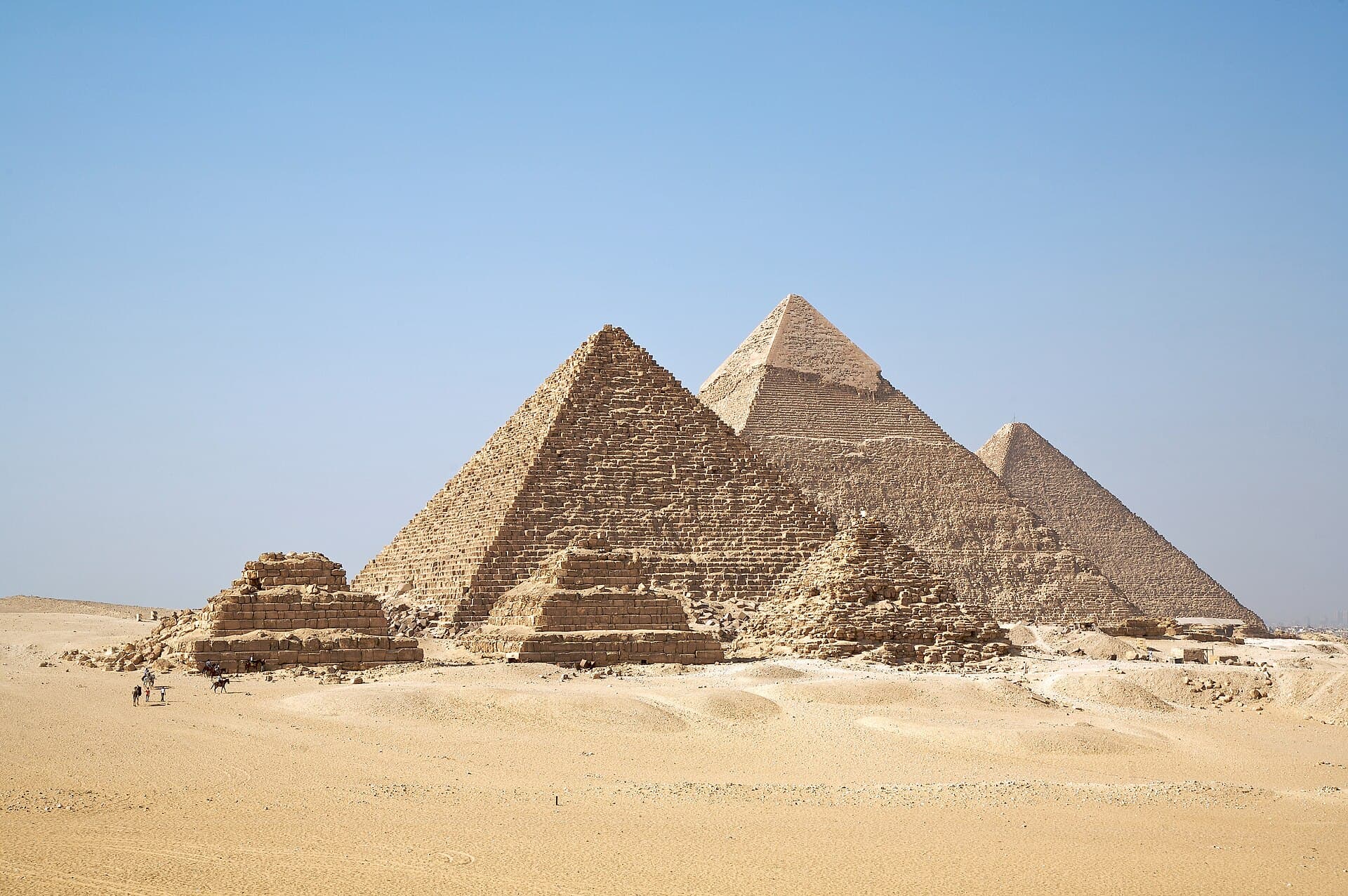
The Great Pyramid rises
Khufu's tomb climbs 147 metres above the Giza plateau, aligned to true north so precisely that modern surveyors nod slowly.
- c. 2000 BC
Kerma rises upstream
In Nubia, mud-brick deffufa temples mark a kingdom that will trade with, raid and defy Egypt for a thousand years.
- c. 1470 BC
Hatshepsut sails to Punt
Egypt's queen-pharaoh sends five ships down the Red Sea for myrrh trees, incense and leopard skins: state trade reaching deep into the Horn of Africa.
III814 BC to 146 BC
Hannibal's Road
Carthage & the Phoenicians
Exiled princes from Tyre built a harbour city that out-traded every rival fleet and then marched war elephants over the Alps. Carthage ran the western Mediterranean from African soil for six centuries, farmed the Maghreb so well that Rome would inherit its granaries, and taught Rome the meaning of the word rival at a price both sides paid.
- 814 BC
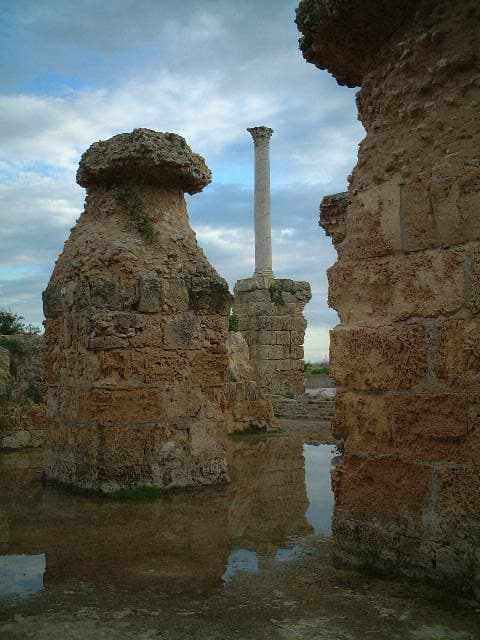
Dido founds Carthage
Legend says the exile queen bargained for as much land as an ox-hide could cover, cut the hide into one thin cord, and circled a hill that would rule the sea.
- c. 500 BC
Mago writes the farming bible
Carthage's agronomists codify twenty-eight volumes on olives, vines and soil so respected that Rome later translates them for its own senate.
- 218 BC
Hannibal crosses the Alps
With war elephants and a polyglot army, Carthage's greatest general brings the war to Italy's doorstep and mauls Rome for sixteen years on its own soil.
- 202 BC
Zama settles it
Scipio defeats Hannibal in Tunisia; the peace strips Carthage's fleet and forbids it to wage war without Roman permission.
- 146 BC
Carthage must be destroyed
After a three-year siege Rome razes the city and sells its people. A century later the same soil feeds Rome, and African grain keeps the legions marching.
IV146 BC to AD 330
Iron & Ivory
Kush, Meroë & Aksum
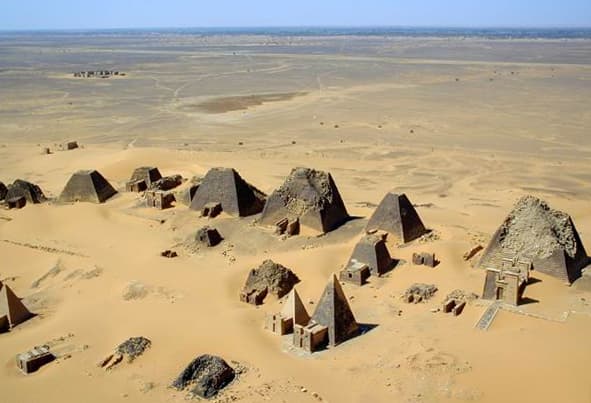
Upstream of Egypt, Kush had already ruled the Nile: Kerma's archers defied pharaohs, King Piye sailed north to crown himself lord of Egypt, and when expulsion came the kingdom moved its capital south to Meroë. There it built steeper pyramids than Egypt's and an iron industry on an industrial scale, while Aksum grew rich on ivory across the Red Sea and began striking its own coins.
- c. 250 BC
Meroë hums with iron
Slag heaps grow into hills around the Kushite capital: roaring furnaces, blacksmith kings and narrow pyramids packed into royal cemeteries.
- 25 BC
Amanirenas blinds Rome's ambition
The one-eyed kandake leads Kush against Augustus's legions, holds her borders for three years of war and wins a peace treaty without paying tribute.
- c. AD 100
Aksum anchors the ivory road
The Periplus of the Erythraean Sea lists Adulis among the great markets: tortoiseshell, rhinoceros horn and ivory flowing to Rome, India and Persia.
- c. AD 270
Coins with no pharaoh
Aksum strikes its own gold, silver and bronze currency, the first sub-Saharan state to do so, trading as an equal across the Red Sea.
- AD 330
Ezana chooses the cross
King Ezana converts to Christianity and carves the decision into royal inscriptions; Ethiopia's churches will keep that faith for seventeen centuries.
VAD 330 to 1235
The Gold Roads
Sahara, Sahel & Swahili
The camel turns the Sahara from a wall into a road. Gold from below the Sahel trades for salt and books across the dunes; the Swahili coast stitches East Africa into the Indian Ocean economy; and as Aksum fades, a new faith, Islam, draws the trade map that will make Timbuktu a byword for learning and Koumbi Saleh a byword for gold.
- AD 350
Aksum closes an old story
King Ezana's armies sack Meroë and end Kushite power; the stele fields of Aksum now speak for northeast Africa.
- c. AD 400
Camels open the Sahara
Caravan economics arrive: salt goes south, gold and ivory go north, and oasis towns become tollbooths on the richest route of the age.
- c. AD 800
Ghana, the land of gold
The Soninke build an empire whose king monopolizes every nugget of raw gold, keeping prices high and rivals guessing about the mines' location.
- 1076
Almoravids storm Koumbi Saleh
Berber reformers seize Ghana's capital; the old empire frays, and the gold trade's centre of gravity drifts east toward Mali's river valleys.
- c. 1100
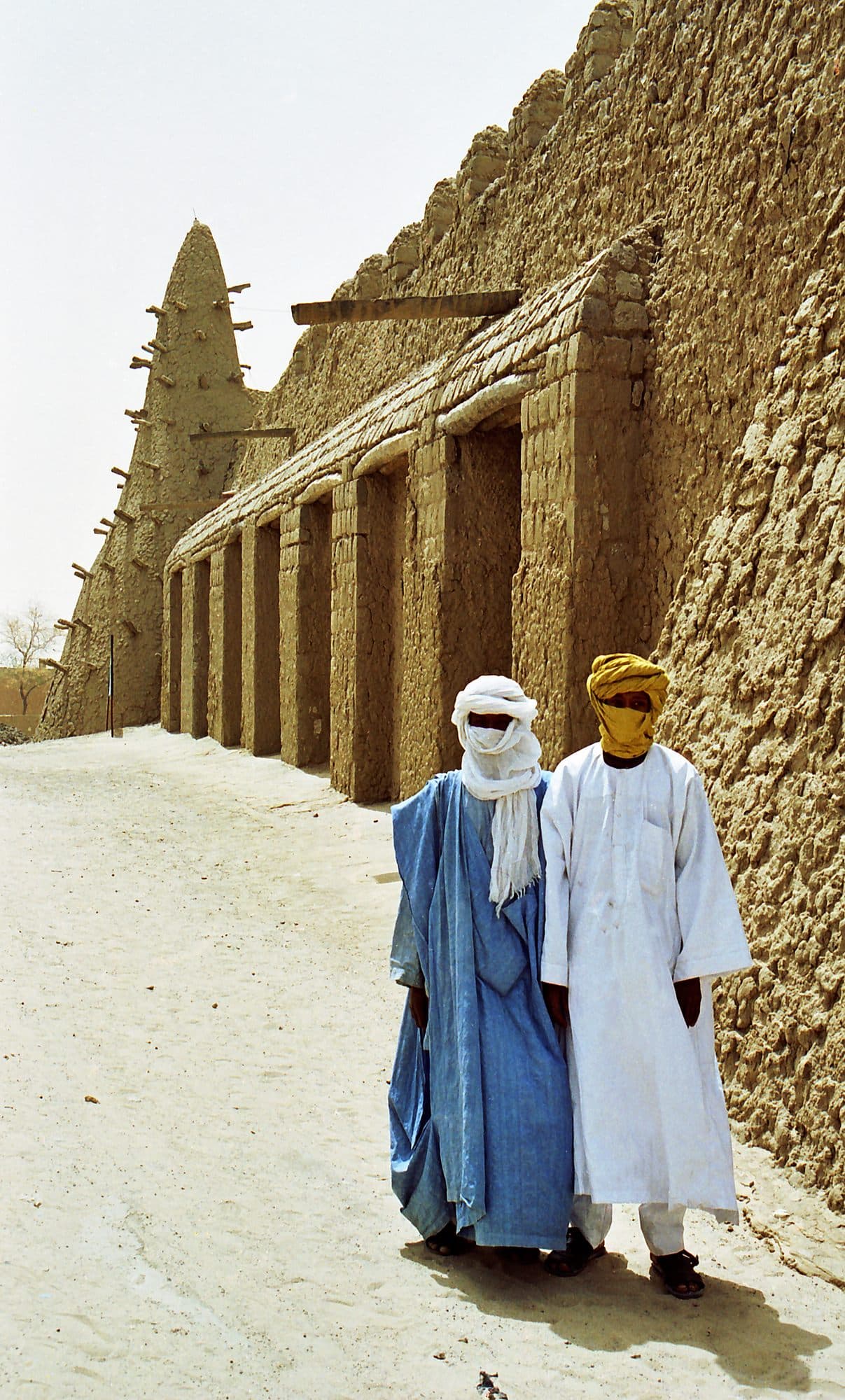
Timbuktu is founded
Tuareg herders settle a seasonal well on the Niger bend; within two centuries the spot will be famous for books before anyone mentions gold.
VI1235 to 1500
Houses of Stone
Sahel, Swahili Coast & Zimbabwe
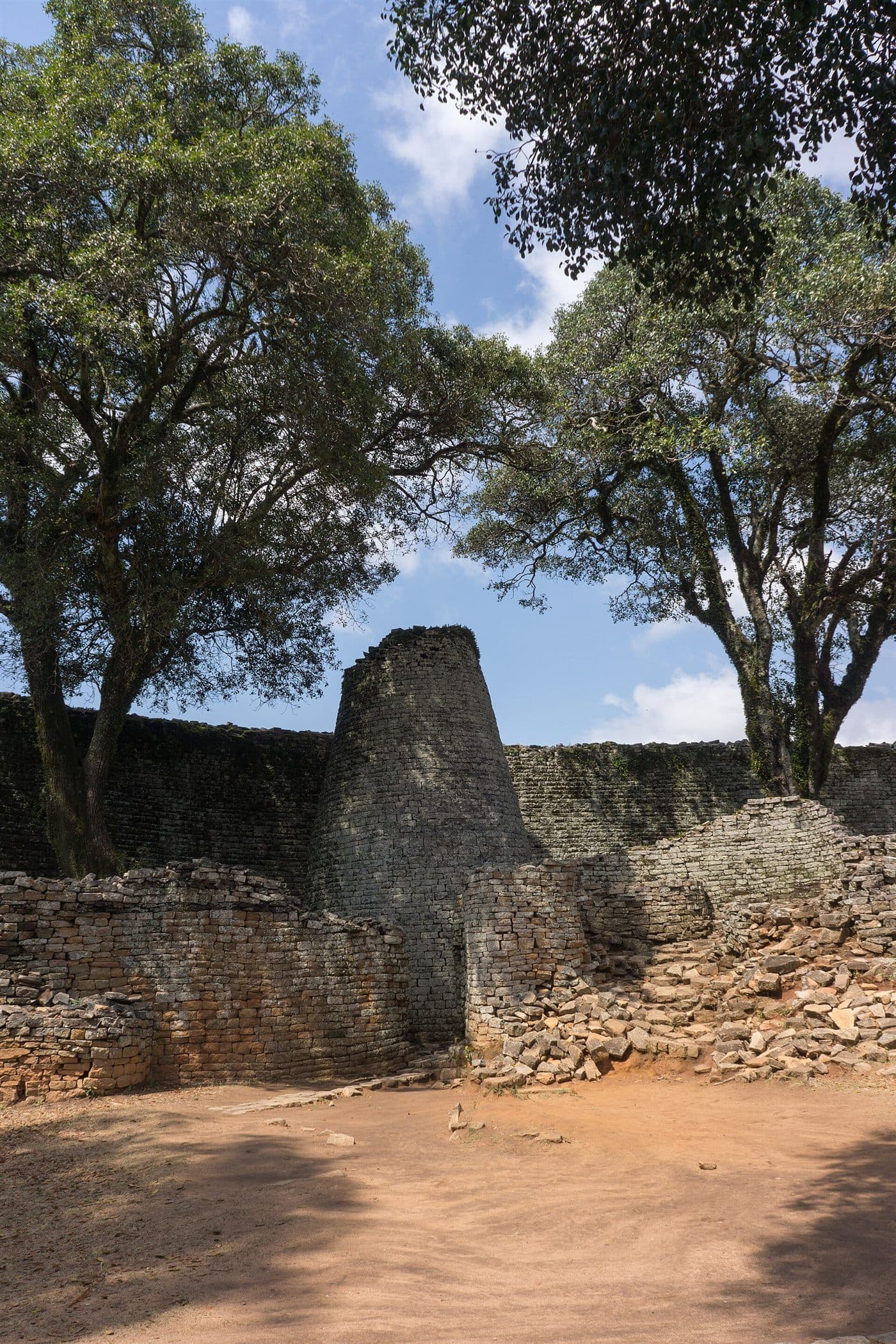
Medieval Africa runs on two engines at once. On the Niger, Sundiata founds Mali and his successor spends so much gold in Cairo that prices wobble for years; on the Swahili coast, stone towns trade with India and China; and between the oceans, Shona builders raise Great Zimbabwe, granite walls eleven metres high without a drop of mortar. Then Portuguese sails round the cape, and every ledger changes.
- 1235
Sundiata wins Kirina
The lion prince defeats the Sosso king and founds Mali, an empire of some twelve million people governed partly by an oral constitution.
- c. 1300
Great Zimbabwe raises walls without mortar
Eleven metres high and five metres thick, the granite enclosure crowns a city of eighteen thousand trading gold through Sofala to the Indian Ocean.
- 1324
Mansa Musa walks to Mecca
Mali's emperor carries so much gold through Cairo that the metal loses value for years: the richest man of his age makes Mali world-famous.
- 1331
Ibn Battuta judges Kilwa
Traveling the Swahili coast, the Moroccan chronicler finds Kilwa among the most beautiful and well-built towns in the world.
- 1414
A giraffe sails for China
Malindi's envoys send Kenya's tallest ambassador to the Ming court aboard Zheng He's returning treasure fleet: diplomacy in the tallest possible terms.
- 1498
Da Gama rounds the continent
Portugal reaches India with an African pilot's help and stays armed: the ocean commons acquires a European gunpowder tenant.
VII1482 to 1750
The Long Crossing
Kongo, Benin & the Atlantic
Portuguese sails reach Kongo in 1482 and Benin's bronze gates soon after; briefly it looks like diplomacy between equals. Then sugar changes the arithmetic. Across four centuries the Atlantic becomes a conveyor of captives, millions cross, and African states rise, arm themselves and collapse around the trade. Resistance is constant: in letters, in quilombos, in queens who refuse.
- 1482
Diogo Cão reaches the Kongo
The river mouth becomes a doorway; within a decade the Manikongo is baptized, literate in Portuguese and exchanging embassies with Lisbon and Rome.
- 1517
Selim takes Cairo
Ottoman guns end the Mamluk sultanate; Egypt, Libya and the Hejaz join the realm, and North Africa settles into three centuries under the Sultan's shadow.
- c. 1514
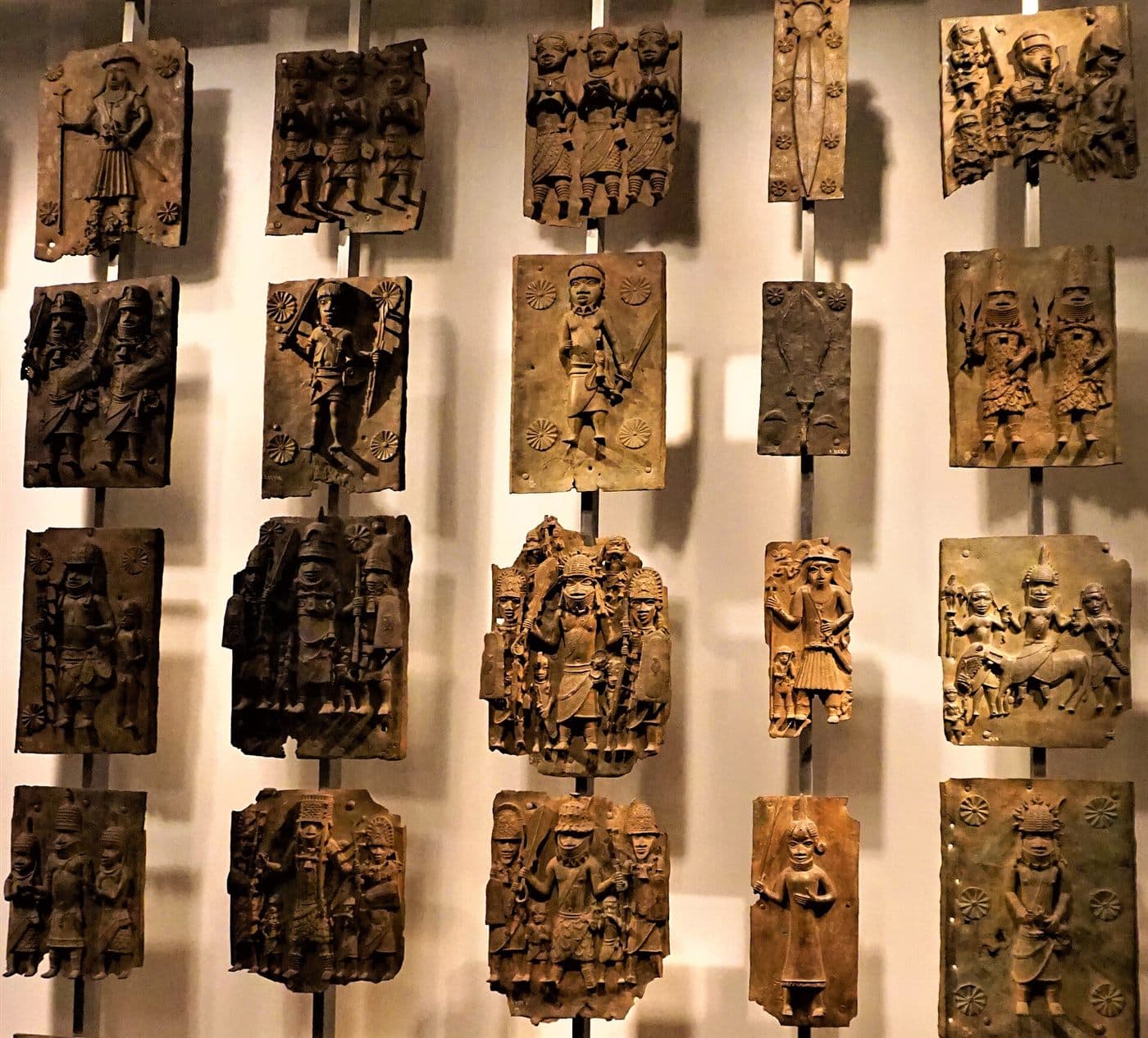
Benin casts its plaques
Brass reliefs of obas, courtiers and leopards multiply across the royal palace: West Africa's greatest sculptural archive, made for walls, not museums.
- 1526
Afonso writes against the trade
The Christian king of Kongo begs Portugal to stop the kidnappings hollowing out his kingdom. The letters are exquisite, and they change nothing.
- 1591
Morocco breaks Songhai
Gunpowder ends Niger-belt independence at Tondibi; Timbuktu's scholars are arrested or exiled and its libraries scattered across the dunes.
- 1624
Nzinga takes the fight
The queen of Ndongo-Matamba wages a decades-long campaign against Portuguese slaving, negotiating as an equal and refusing surrender to the end.
- 1655
Palmares is born free
Escaped Africans raise a fortified state inside Brazil, the largest quilombo in the Americas, and hold it against repeated expeditions for most of a century.
VIII1750 to 1882
The Ottoman Shore
Ottoman North Africa
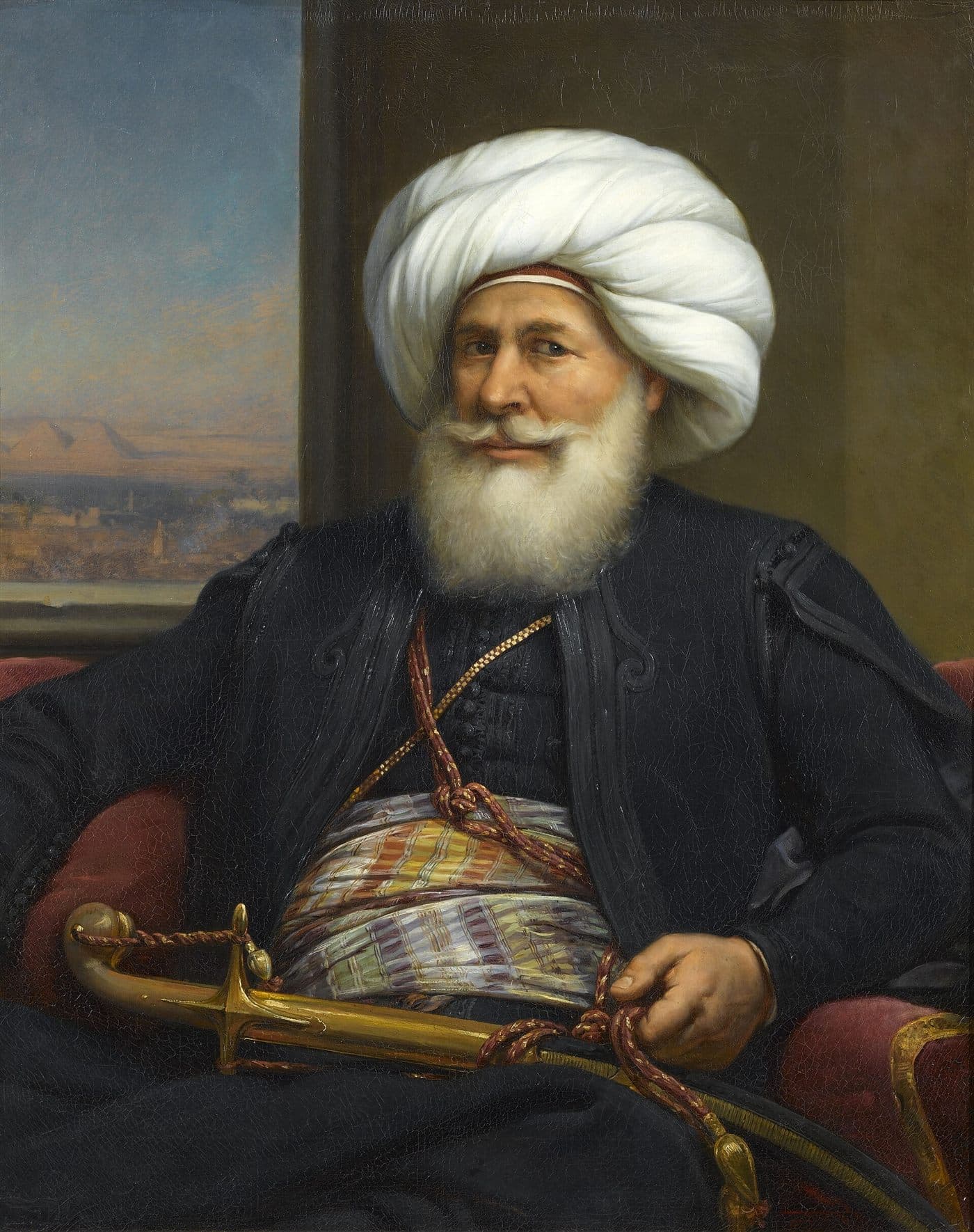
From Algiers to Benghazi, Africa's Mediterranean shore answered to the Sublime Porte: regencies of corsair admirals and pashas sent from Istanbul, paying tribute when they could not fight. Napoleon tried to cut the thread in Egypt and failed; his failure woke up an Albanian soldier named Muhammad Ali, who took Egypt for himself and modernized it faster than Istanbul liked. Then Europe came back with steamships and ledgers.
- 1798
Napoleon lands in Egypt
A French army shatters the Mamluks within sight of the Pyramids, bringing scientists as well as soldiers; British-Ottoman counterstrokes follow, and the modern scramble is born.
- 1805
Muhammad Ali takes Egypt
An Ottoman Albanian officer outmaneuvers every rival and founds a dynasty: cotton exports, conscript armies, factories and a press, all in one generation.
- 1816
Shaka rewrites war
The short stabbing spear and bull-horn formation forge southern Africa's most formidable kingdom and set the Mfecane migrations in motion.
- 1830
France seizes Algiers
A border dispute over a fly-whisk becomes a conquest; the Ottoman regency falls and France begins a 132-year African empire on the Barbary coast.
- 1869
The canal joins two seas
Egyptian corvée labour and French engineering cut Suez through the desert; the shortcut instantly becomes the most contested water on Earth.
- 1881
France takes Tunisia
A punitive raid across the border becomes a protectorate; Italy's envy of it pushes Rome toward alliance games that end at Adwa and Tripoli.
IX1882 to 1914
The Scramble
Partition & Resistance
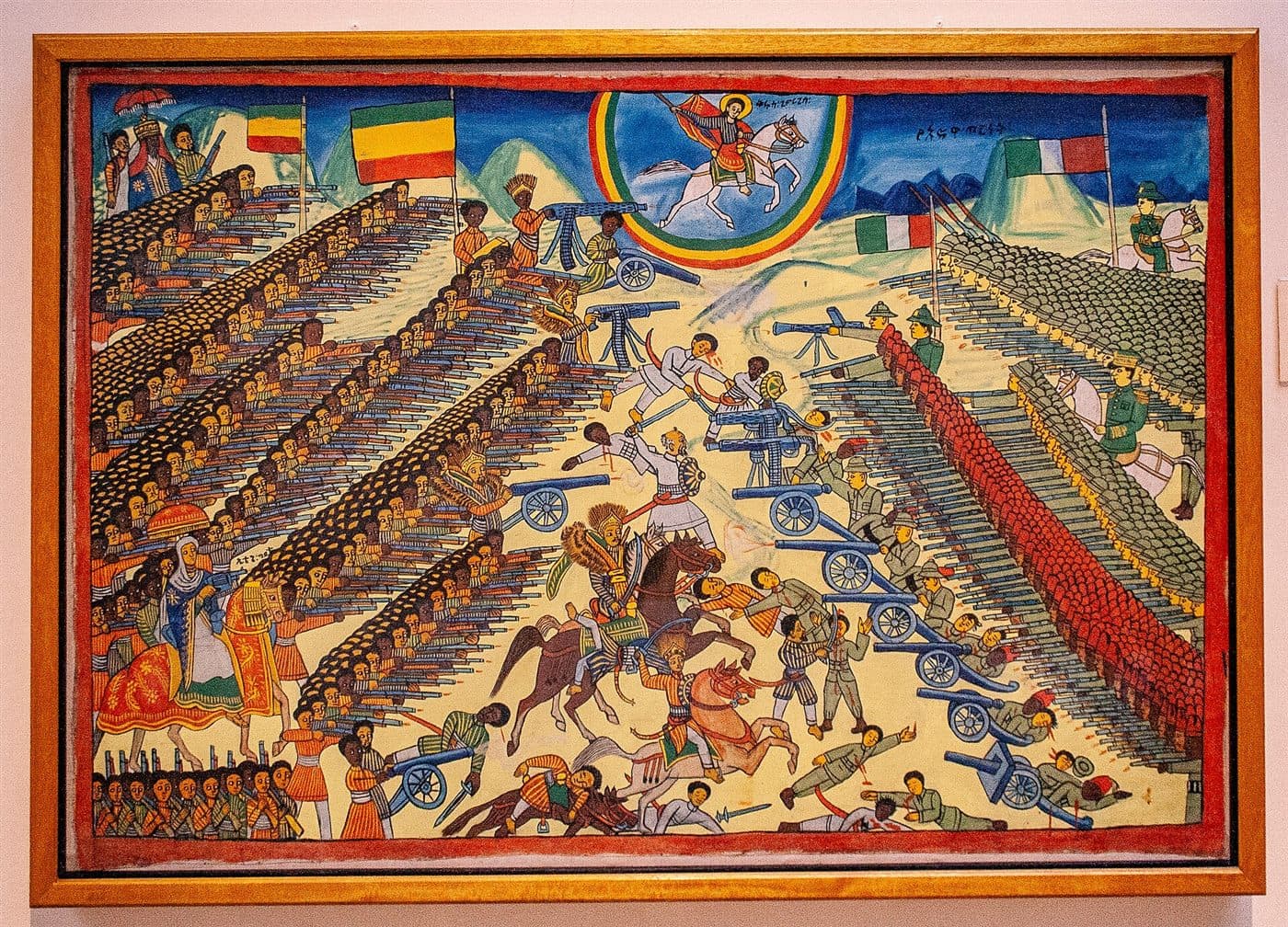
Africa enters the nineteenth century with its own empires, reforms and revolutions, and leaves it carved up at a conference table in Berlin. Yet conquest is contested everywhere it lands: Zulu regiments rewrite warfare, Abyssinia arms itself and destroys a European army, and every colony costs its conqueror more than the maps promised investors.
- 1884
Berlin divides a continent
Fourteen powers agree rules for claiming Africa without a single African present; by 1914 only Liberia and Ethiopia remain uncolonized.
- 1896
Adwa breaks the pattern
Menelik II and Empress Taytu arm, outmaneuver and annihilate an Italian invasion at Adwa; Ethiopian independence holds for another forty years.
- 1904
Namibia's first genocide
German forces crush Herero and Nama uprisings in South-West Africa and drive survivors into the desert: the twentieth century's first genocide.
- 1908
Congo hands over from a king to a state
Leopold II's private rubber regime, blamed for millions of deaths, becomes the Belgian Congo after an international scandal built on testimony from the mission field.
X1914 to 1945
Empires' Wars
World Wars & Pan-Africanism
Europe's wars become Africa's wars: a million Africans serve as soldiers and porters, territories change hands like playing cards, and veterans come home asking why the freedom they fought for stops at the colonial office door. Between the wars, pan-Africanism organizes the answer; during them, Ethiopia's fall shows exactly what is at stake.
- 1914
War crosses the continent
German East and West Africa become battlefields; carriers die by the tens of thousands, mostly of disease, hauling supplies nobody thanks them for.
- 1919
Paris hears pan-Africa
W.E.B. Du Bois convenes the first Pan-African Congress while the peace conference redraws maps; a united African future gets its first agenda.
- 1935
Italy invades Ethiopia
Poison gas and bombers defeat the last independent African state; the League of Nations watches, and its credibility dies with Addis Ababa's neutrality.
- 1936
It is us today
Haile Selassie addresses the League in Geneva, warning Europe that the aggression rehearsed on Ethiopia will reach them next. He is heard, then ignored.
- 1942
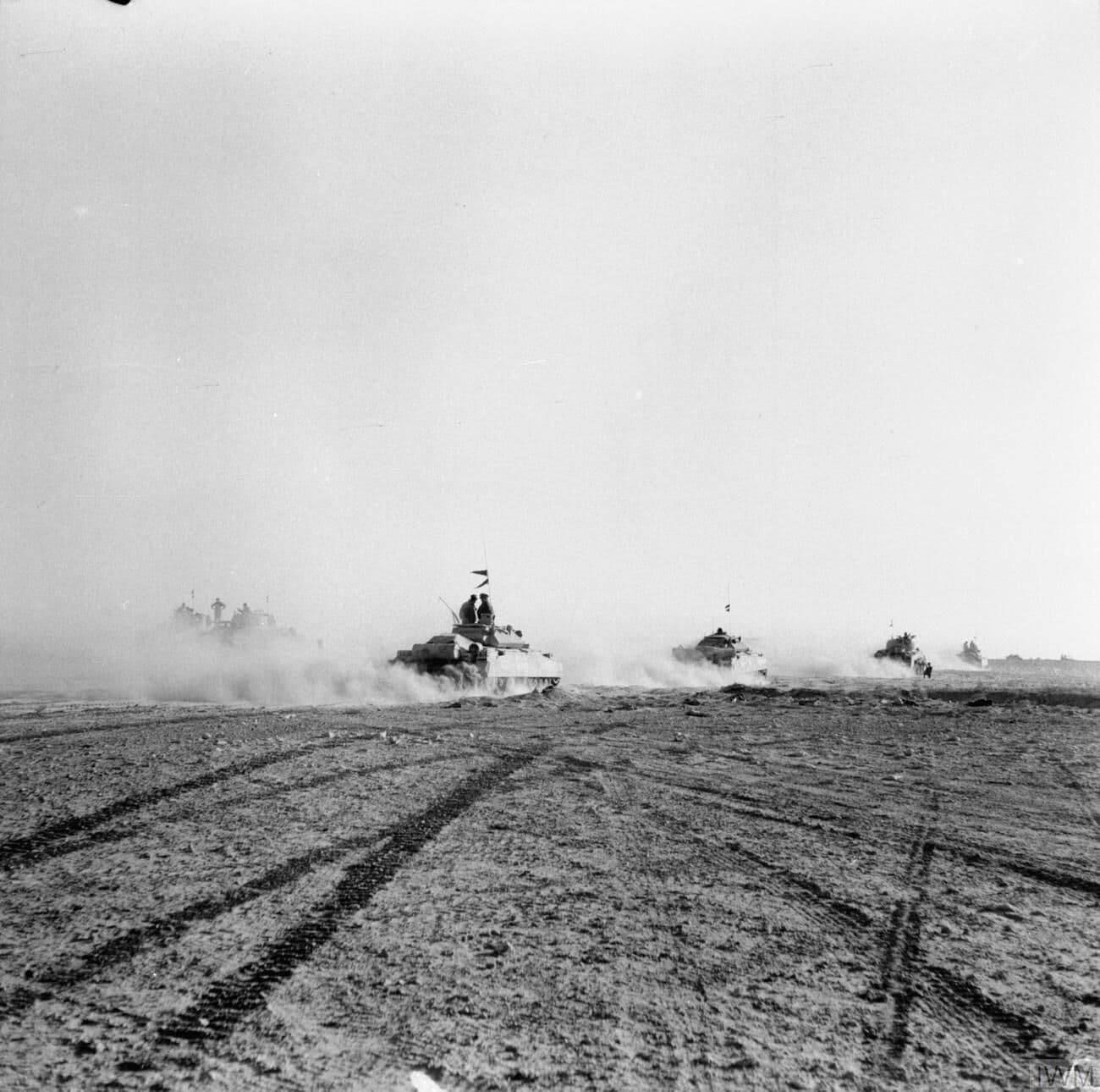
El Alamein turns the tide
Montgomery's Eighth Army breaks Rommel in Egypt; African soil hosts the battle that begins the Third Reich's long retreat westward.
XI1945 to 1980
Wind of Change
Independence
The war exhausts the colonizers and emboldens the colonized. Ghana's midnight sets the pace, seventeen flags follow in 1960 alone, and liberation movements pay in blood from Algiers to Angola. By 1980 the map is almost entirely African-run, inheriting borders drawn elsewhere and debts signed in the same ink.
- 1948
Apartheid becomes law
The National Party wins South Africa on racial separation and begins constructing the century's most complete legal cage, law by law.
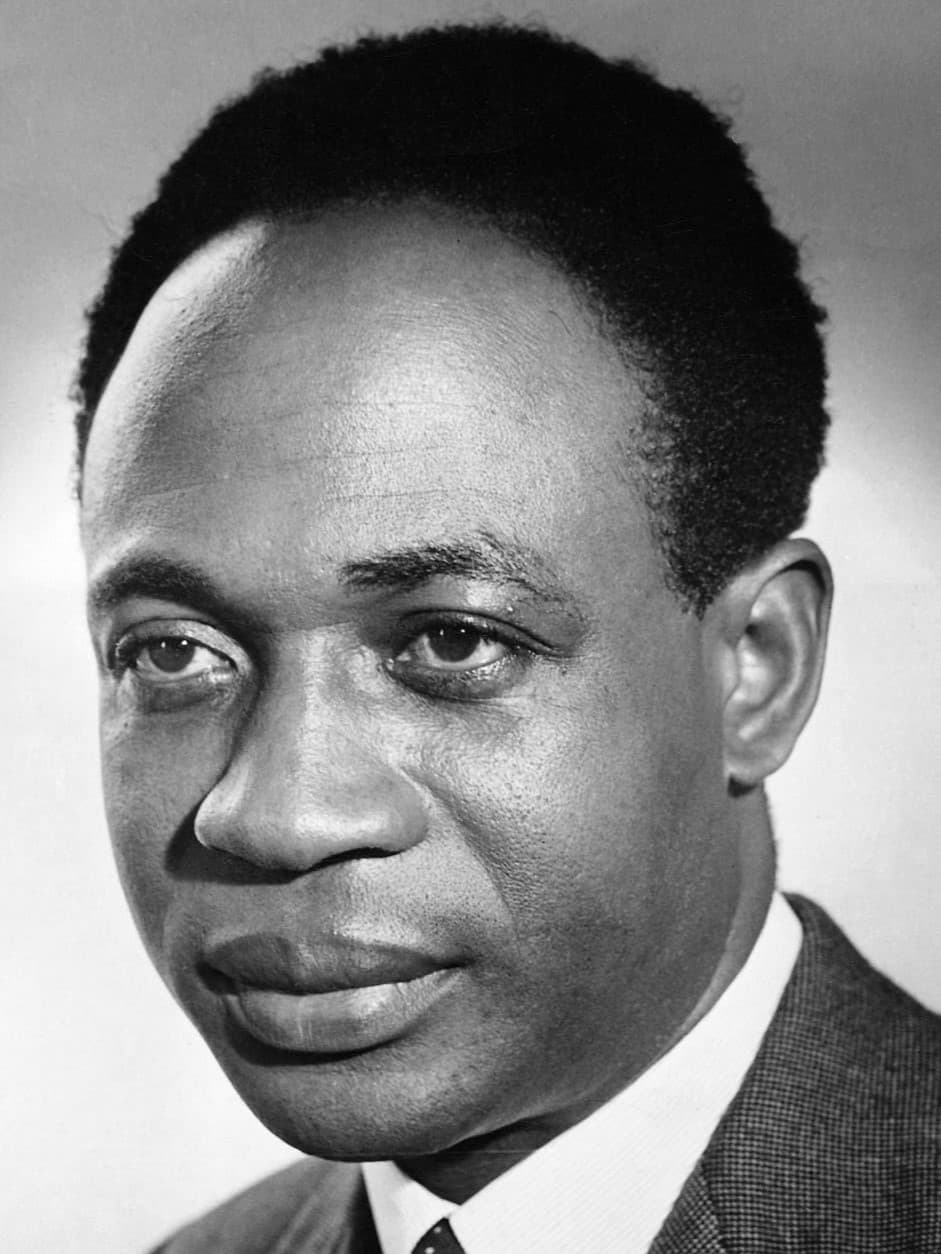
- 1957
Ghana is free forever
At midnight in Accra, Nkrumah declares that Ghana's freedom means nothing unless the whole continent follows. The continent takes notes.
- 1960
The Year of Africa
Seventeen nations gain independence in twelve months; the UN map changes faster than any atlas can print.
- 1963
The OAU is born in Addis
Thirty-two states sign the charter of continental unity, agreeing to keep the colonial borders and defend each other's sovereignty anyway.
- 1975
Portugal lets go
The Carnation Revolution ends Lisbon's empire within a year: Angola, Mozambique, Guinea-Bissau and the island states go free.
XII1980 to 1999
Long Walk to Freedom
Liberation
The last cages take the longest to open. Zimbabwe is born in 1980 after fifteen years of bush war; South Africa answers schoolchildren's protests with bullets until the world isolates it; Rwanda shows in ninety days how fast borrowed hatred can kill. And yet the same decade frees Mandela, seats a democratic parliament and invents a way to investigate the past without burning the future.
- 1980
Zimbabwe is born
After fifteen years of war Rhodesia becomes Zimbabwe, inheriting the region's best schools alongside its freshest grievances.
- 1990
Mandela walks out
Twenty-seven years of imprisonment end at Victor Verster gates; the apartheid state has already unbanned his party, and negotiations begin in earnest.
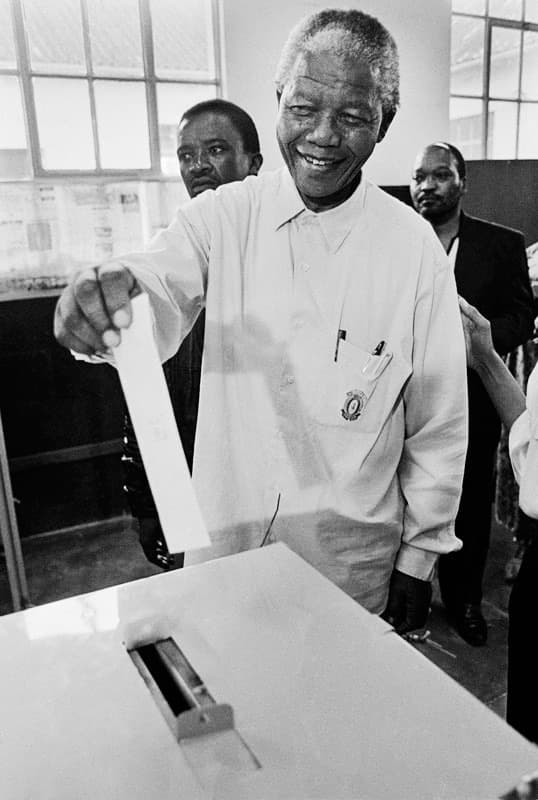
- 1994
Two Aprils
In one month, Rwandan radio helps machetes murder eight hundred thousand people, and South African queues elect Nelson Mandela: the continent's worst hour beside its proudest.
- 1996
The truth is put on trial
South Africa's Truth and Reconciliation Commission trades amnesty for testimony, inventing a third way between vengeance and amnesia.
- 1999
Nigeria votes again
Africa's giant returns to civilian rule after sixteen years of generals, closing the continent's coup decade with a ballot box.
XIII2000 to today
The African Century
2000 to Now
The youngest population on Earth starts writing its own terms. Mobile phones leapfrog landlines, mobile money leapfrogs banks, a fifty-four-state union signs the largest free-trade area by member count in history, and Lagos, Nairobi, Cairo and Kigali ship software, films and finance across borders the colonizers drew. The chronicle catches up to the present tense, and hands over the pen.
- 2002
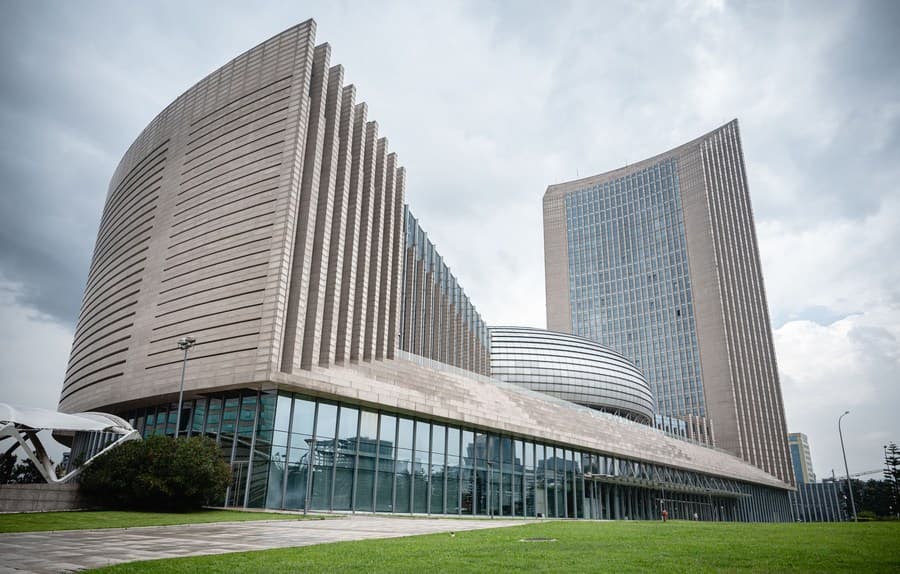
The African Union launches
The OAU's successor adds a standing Peace and Security Council and a parliament, upgrading a talking club into a working union.
- 2007
M-Pesa moves money
Kenyans begin sending value by text message; within a decade mobile money banks the unbanked and moves a huge share of the planet's remittances.
- 2019
Afrobeats tops the world
Nigerian and Ghanaian pop crosses over globally, filling stadiums from London to Lagos and rewriting what global hit records sound like.
- 2021
Trading under AfCFTA begins
Fifty-four states activate the largest free-trade area by member count since the WTO: one market, 1.4 billion people, negotiated by Africans.
- 2026
The median African is nineteen
Most of the world's new workers will be African within a generation; the youngest continent meets the oldest questions with the newest tools.
The Ledger
0
sovereign states
0+
living languages
0
years median age
0
million square kilometres